
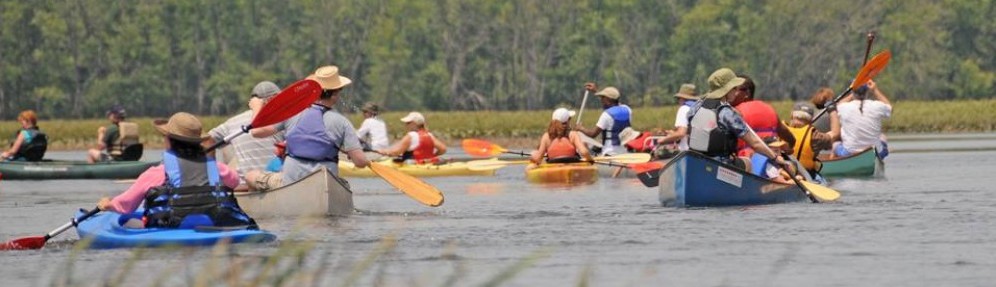
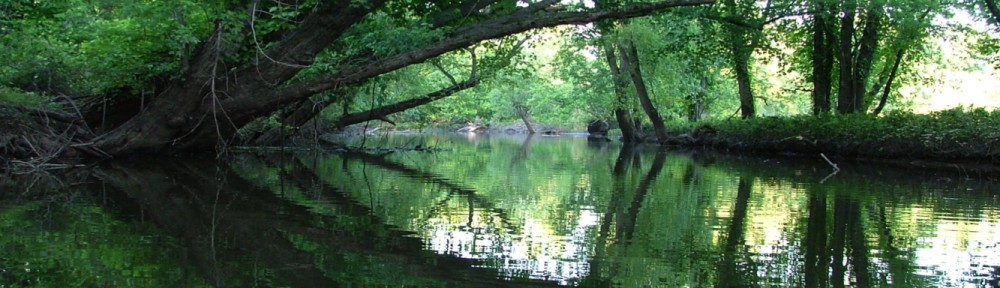
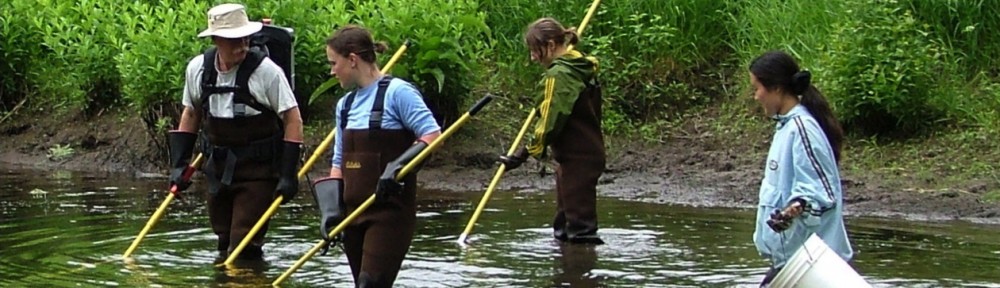

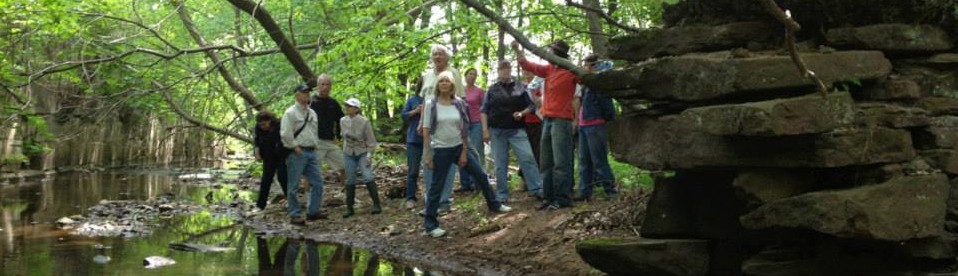

 For the past 4 years, the Jonah Center has organized work parties of 20-30 paddlers each to remove invasive water chestnut (trapa natans) from the Floating Meadows, the 1000 acre freshwater tidal marshland formed by the Mattabesset and Coginchaug Rivers.
The map above indicates the primary location of plants in the previous few years. This year, plants are visible upstream from this area, where the “Mattabesset River” label is seen, and still father upstream from there, where the river turns sharply to the right at the top of the map. These are the areas of primary focus.
 Due to the pandemic, the Jonah Center has not organized large work parties. We have encouraged paddlers to go out solo or in small family groups. Bring a large plastic bag, gently pull up plants by the roots, place them in the bag, and deposit the plants near the informational kiosk in the boat launch parking area.
If you are able to pull more plants than you can carry, please place them on one of the floating drying rafts anchored in the area. The plants will drain, dry out in the sun, lose most of their weight and volume, and become easier for others to bring back to the launch site by motor boat. We will ask the Public Works Department to dispose of them when plants have accumulated. Please contact us if you have gone out to remove plants and let us know what you have found in terms of location and number of plants. We will all do the best that we can.

This plant drying raft was designed and constructed by Jonah volunteer Mike Thomas.

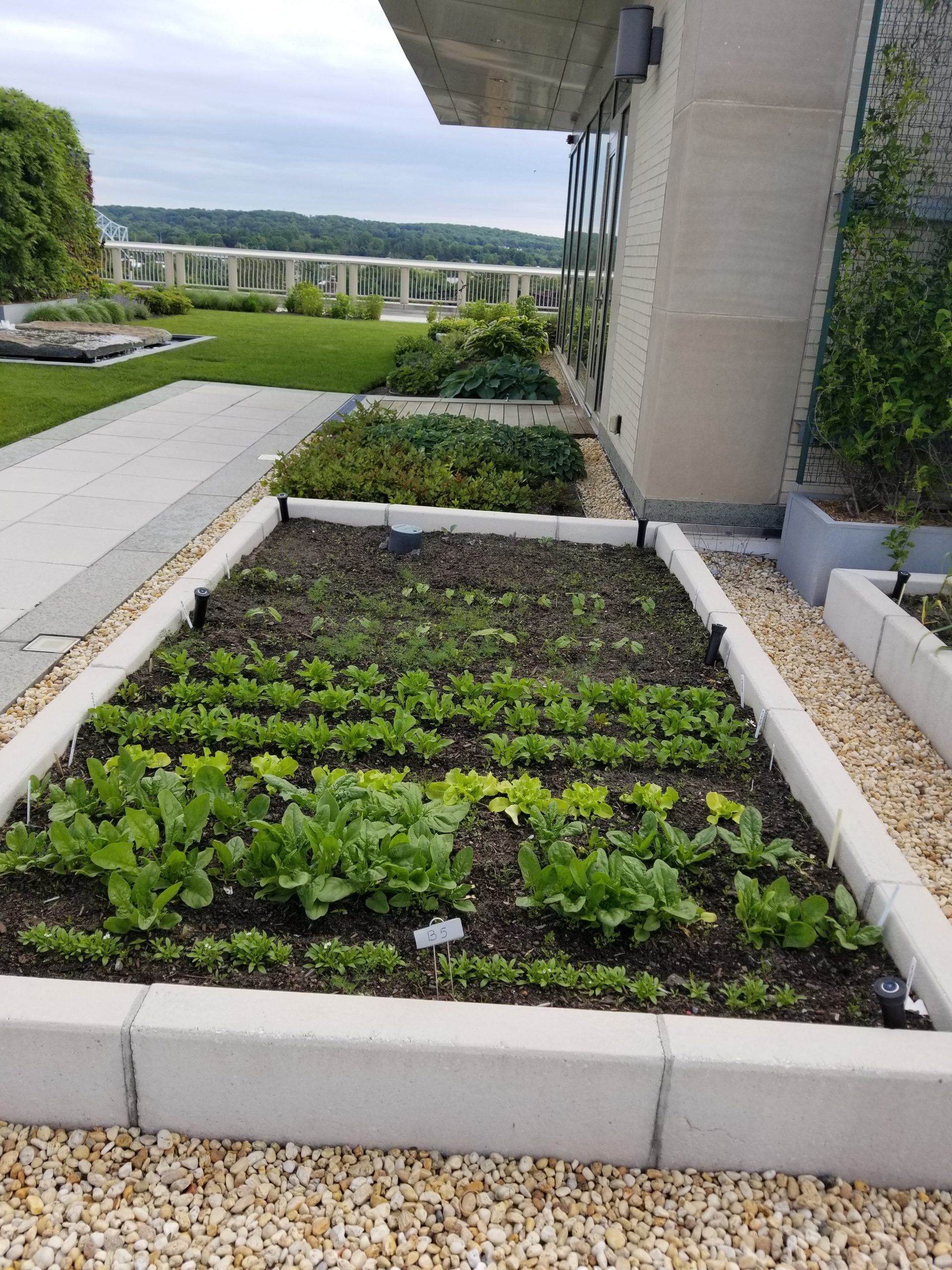 The Middletown Garden Club has begun its eighth season of gardening on the rooftop of the Community Health Center. For the past seven years, our partner has been MARC, but Covid-19 has put that relationship on hold indefinitely. With approximately 500 square feet of irrigated raised beds, the rooftop garden has been highly productive. The carefully engineered soil and water-recapture system work to make the beds ideal for vegetable and root crops. Each year, we “open up” the gardens by removing any weeds that may have germinated over the winter, and begin to plan a new lay-out for the crops. We rotate plant locations to avoid any possibility of disease build-up in beds, especially where tomatoes are grown.
  While the project to repair and replace the approach ramps and sidewalks of the Arrigoni Bridge is underway, controversy about the work continues to swirl. Apparently, CT DOT’s original plan was approved by the previous Middletown administration with no public hearing or citizen comment. The stated goal of the project, according to CT DOT, was to improve the efficiency of Main Street between Washington and Hartford Ave. and the entrances to Route 9 and the Arrigoni Bridge. DOT’s interest in reducing congestion in this area is probably related to future plans to remove traffic signals from Route 9, which will involve some changed traffic patterns in the downtown area, especially near the bridge. Here are some of the issues and concerns surrounding the project.
